5 Hidden Features of the Pixel Usb C Earbuds You Must Know About
Category: Audio
Introduction
The Pixel Usb C Earbuds are often chosen by buyers who want a straightforward, wired listening experience without a 3.5mm jack. On the surface they look like a simple in-line headset: earbuds, cable, microphone and a button. But beneath that simplicity are subtle features and behaviors that make them more flexible and valuable than many shoppers first realize. This article explores five less-obvious or "hidden" features of the Pixel Usb C Earbuds, explains why they matter in real-world situations, and helps readers decide whether they fit specific needs.
Why these hidden features matter
Buyers typically care about sound quality, call performance, convenience, compatibility and longevity. For USB-C wired earbuds the ecosystem and software integration play a bigger role than with basic analog headsets. A feature that is "hidden"—for example, a button pattern that changes tracks, or the way the earbuds interact with a phone's noise suppression—can directly affect daily use cases like commuting, remote work calls, and content creation on mobile devices. The items below focus on practical benefits rather than marketing claims.
Feature 1 — One-tap access to Google Assistant and contextual queries
One of the best-known but still underused features of the Pixel Usb C Earbuds is the inline button that invokes Google Assistant. What is less obvious is how useful this becomes in hands-busy or attention-sensitive moments.
- Real-world use case: While cycling to work, a single press (or a long press, depending on phone settings) can bring up the Assistant to read a calendar item, send a short message or get directions without looking at the screen.
- Why it’s valuable: The Assistant can handle context-aware queries that go beyond simple play/pause—such as pausing background media and reading notifications aloud, or converting a spoken note into a calendar entry. This keeps the user safer and more efficient when multitasking.
- Notes on behavior: The exact activation pattern (press vs. long press) and available voice features depend on the connected phone and its Assistant settings; on Pixel phones the integration tends to be deeper, while on some third-party Android phones functionality can be slightly limited.
Feature 2 — Multi-press remote controls that work across most Android apps
Many users assume that the single-button remote only toggles play and pause. In fact, the remote supports multiple press sequences—single, double and triple presses—and sometimes press-and-hold actions that are mapped to different transport controls.
- Real-world use case: While walking the dog, a double-press on the headset advances to the next podcast chapter; a triple-press returns to the previous chapter, enabling hands-free navigation of long media sessions.
- Cross-app behavior: These control conventions are broadly supported by Android and many media apps. They work in popular music players, podcast apps and video apps that honor the standard media button intent.
- Buyer tip: If an app doesn’t respond as expected, check the app’s background playback and headset control permissions—some apps require explicit permission to respond to media button events.
Feature 3 — Digital audio path via USB-C (consistent playback and potential quality benefits)
Because the Pixel Usb C Earbuds connect via USB-C, they carry a digital audio signal rather than an analog one. Many buyers forget that this changes the audio chain and brings both advantages and constraints.
- What it means technically: USB-C wired earbuds include a small digital-to-analog converter (DAC) and sometimes a digital audio controller inside the plug or inline module. That means the earbuds present a defined playback path that is less dependent on the phone’s analog jack hardware.
- Real-world benefits: Consistent tonal balance across devices. On phones with noisy headphone jacks or worn analog outputs, the digital connection removes a variable that could degrade sound. For users who primarily listen to streamed music or podcasts on a phone, this results in predictably stable playback.
- Limitations and clarity: The ultimate sound quality still depends on the internal DAC and the phone’s USB audio support. Those who demand high-resolution audio should check whether their device supports USB Audio Class (UAC) profiles and whether the earbuds’ internal audio processing meets their expectations.
Feature 4 — Call handling and software-assisted noise suppression
Microphone quality is a top concern for buyers who expect clear calls and teleconferencing on mobile devices. The Pixel Usb C Earbuds’ mic works as more than a simple transmitter: when paired with phones that include software noise suppression (notably Pixel phones and some modern Android devices), the microphone’s signal integrates with those algorithms to improve clarity.
- Real-world use case: During a noisy commute or in a home environment with background appliances, the earbuds’ mic combined with the phone’s voice-processing can reduce distracting sounds and help the listener hear the caller more clearly.
- Control convenience: The single inline button typically accepts and ends calls with a press, rejects with a long press, and supports redial on some sequences—simple behaviors that remove friction for frequent callers.
- Compatibility caveat: The extent of software noise suppression depends on the phone. Pixel devices generally display the best integration because the phone’s voice-processing is tuned with Google’s own accessories in mind; on other Android phones, results vary.
Feature 5 — Broad device compatibility and graceful fallbacks
Buyers often wonder whether USB-C earbuds will work with laptops, tablets or phones from other manufacturers. The Pixel Usb C Earbuds are built to function across many devices that implement USB audio standards, and they exhibit helpful fallback behaviors in mixed environments.
- Real-world scenarios: Plugging the earbuds into a modern laptop’s USB-C port usually yields instant audio support for calls and media. Journalists or podcasters can use the earbuds as a portable, low-latency monitor and microphone when recording on the go, provided the host device recognizes USB audio.
- Fallbacks to watch for: Some older devices or very specific USB-C ports that don’t support audio will not pass sound. In those cases a simple error or no audio will occur; the earbuds do not require special drivers on most contemporary platforms.
- Buyer tip: If cross-device compatibility is a major concern, test the earbuds in store or check the device’s spec for “USB Audio Class” support before purchasing.
Detailed product review and analysis
The Pixel Usb C Earbuds shine when evaluated as a pragmatic, everyday wired option for modern phones without headphone jacks. Below is a breakdown by key attributes and what buyers typically care about.
Discover deals on Audio & Headphones — updated daily.
Browse Now →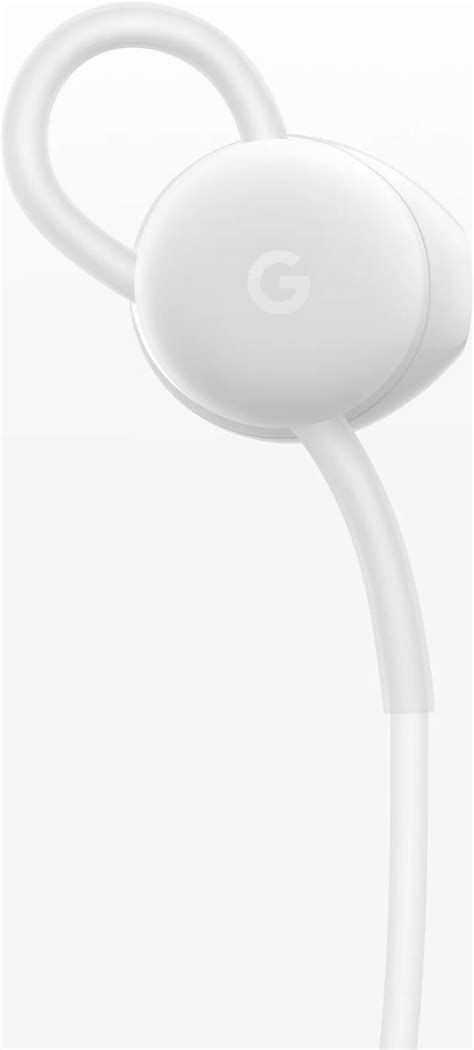
Design and comfort
The earbuds prioritize simplicity. The housings are compact with a neutral tuning that won’t fatigue listeners. For many users the fit is comfortably secure for walking and commuting, though those who prefer heavily sealed or foam tips for passive isolation may find the stock silicone tips less isolating.
Sound quality
Sound is tuned for general-purpose listening—clear mids and controlled highs work well for podcasts and pop music. Bass is present but not overwhelmingly emphasized. Audiophiles who expect deep, room-shaking low end might prefer over-ear cans or sport a dedicated portable DAC/headphone setup. That said, the consistent digital path discussed earlier keeps tonal balance stable across device pairings.
Microphone and call quality
In quiet environments the mic is perfectly adequate for calls and voice commands. In noisy settings the combination of mic hardware and phone-side processing helps reduce wind and background noise; Pixel devices tend to perform best here. For frequent remote workers, they are a reliable option for quick calls, though a dedicated headset microphone still outperforms them in professional broadcast situations.
Controls and usability
The inline button is intuitive and widely supported. Multi-press gestures for next/previous track work in most apps and the Assistant shortcut is genuinely useful for hands-free tasks. Because there is no battery to manage, usability is straightforward—plug in and go.
Durability
Cable durability is typical for bundled wired earbuds: reasonable for daily use but not indestructible. Buyers who plan intense workouts or rough handling should consider reinforced cables or sport-oriented models. Replacing a pair is cheap compared to repairing a high-end headphone, but gentle handling will extend life.
Value and target buyer
These earbuds are positioned for buyers who want a reliable, simple, and integrated wired solution without adapters. They appeal to commuters, travelers, and anyone who prefers wired simplicity over wireless charging and battery management.
Pros & Cons
- Pros:
- Direct Google Assistant activation for hands-free use
- Multi-press remote controls for common media tasks
- Consistent digital audio path via USB-C
- Good call performance when paired with phones that support software noise suppression
- Plug-and-play on many modern phones, tablets and laptops
- Cons:
- Limited passive isolation compared with foam-tipped or over-ear headphones
- Sound tuning is neutral—may not satisfy bass-first listeners
- Cable-based design less convenient for sports and intensive movement compared with wireless buds
- Some features depend on phone software and may be limited on non-Pixel devices
Comparison table: Pixel Usb C Earbuds vs common alternatives
| Feature | Pixel Usb C Earbuds | Generic USB-C Earbuds | Wireless Earbuds (true wireless) |
|---|---|---|---|
| Connectivity | Wired USB-C — digital audio | Wired USB-C — varies by manufacturer | Bluetooth — wireless, requires battery |
| Assistant integration | Built-in button for Google Assistant (deepest on Pixel phones) | May or may not include Assistant shortcut | Often includes voice assistant support but must wake earbuds first |
| Controls | Single-button with multi-press | Depends on vendor; sometimes limited | Touch controls or buttons; more customizable in companion apps |
| Call quality | Good, improves with phone-side processing | Variable | Often good; depends on microphones and spatial processing |
| Battery | No battery required | No battery | Requires charging and ongoing power management |
| Best for | Users who want plug-and-play, no-battery wired listening | Budget-conscious buyers or device-specific use | Active users who want freedom from wires and advanced features |
Buying guide: how to decide if the Pixel Usb C Earbuds are right
When evaluating whether these earbuds are the right pick, consider the following buyer concerns and how the Pixel Usb C Earbuds address them.
1. Device compatibility
Check whether your device supports USB audio output. Most modern smartphones, tablets and laptops do, but older or very low-cost devices may not. For seamless experience, test the earbuds with your device or confirm the device specification lists USB Audio Class support.
Shop the latest Audio & Headphones picks on Amazon.
View Offers →2. Intended use
If portability, no-battery convenience and predictable sound are top priorities—especially for commuting, travel or quick calls—these earbuds are a strong fit. If wireless freedom or active noise cancellation are required, consider true wireless alternatives.
3. Call and voice assistant needs
For frequent voice-controlled workflows (e.g., asking directions, sending short messages by voice, hands-free calling), the built-in Assistant activation and inline controls pay off. Buyers who live in noisy environments should pair the earbuds with devices that have strong software noise reduction.
4. Sound profile and listening preferences
These earbuds aim for balanced sound rather than heavy bass or exotic tuning. For podcast listeners, audiobooks and casual music fans, that is usually ideal. Bass-first listeners should audition them to verify satisfaction.
5. Durability and warranty
Consider how often the earbuds will be handled roughly. For heavy workouts, rain exposure or frequent stuffing into pockets, reinforced cables or sport-specific models may be better. Confirm warranty terms and the vendor’s return policy to avoid surprises.
6. Future-proofing and ecosystem
USB-C wired solutions remove battery-management concerns and remain useful as long as the device supports USB audio. If the buyer tends to change phones frequently, choosing earbuds with broad compatibility reduces the risk of becoming obsolete after a device upgrade.
Practical tips for getting the most out of the Pixel Usb C Earbuds
- Customize Assistant settings on the phone so the inline button behaves the way the user expects—single press vs long press can often be adjusted within voice assistant settings.
- Use media apps that support background playback for reliable multi-press control behavior.
- Carry a small set of spare silicone tips if fit or isolation is a concern; aftermarket tips can improve comfort and bass response.
- For laptop use, check audio input/output settings to ensure the OS recognizes the earbuds as the active device for both mic and speakers.
- If call quality matters professionally, test the earbuds in the specific calling environment (home office, street, transit) to ensure the combination of mic and phone-side processing meets expectations.
Conclusion
The Pixel Usb C Earbuds do more than simply replace a 3.5mm cable: they bring integrated assistant access, smart multi-press controls, a stable digital audio path and practical cross-device compatibility. For buyers who value simplicity, predictable performance and hands-free convenience—especially when paired with modern smartphones—the earbuds are a solid, practical choice. Understanding the hidden features outlined above helps potential buyers get past first impressions and make daily use smoother and more productive.